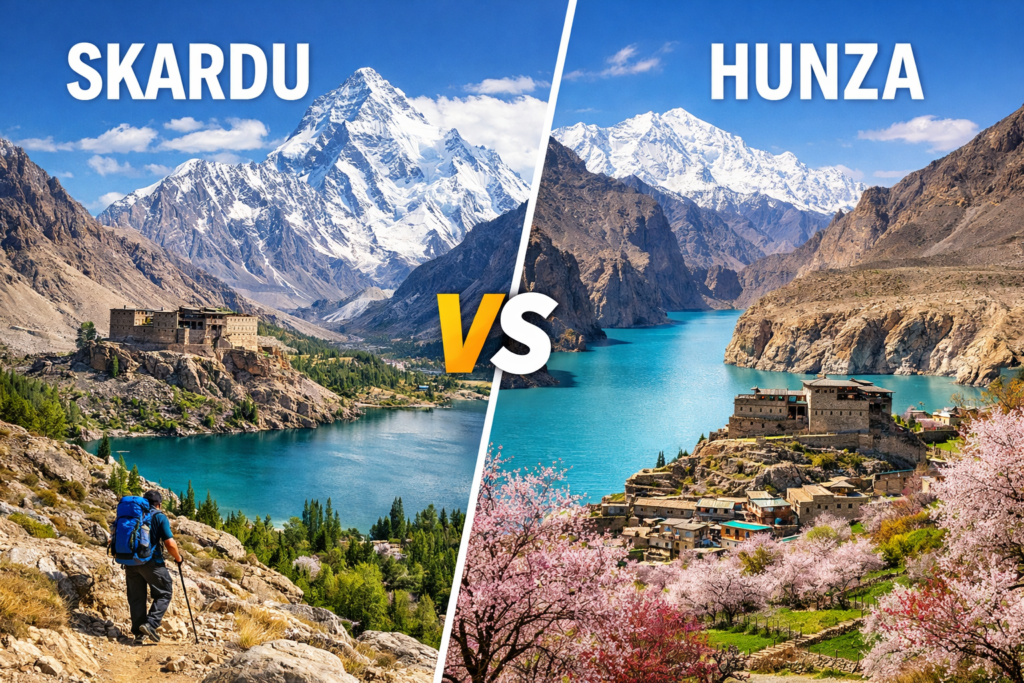
The northern territories of Pakistan feature some of the most dramatic mountain scenery globally, with Skardu and the Hunza Valley representing two of its most celebrated highlights. While both share the majestic backdrop of the Karakoram range, they provide distinctly different travel experiences shaped by their geography and culture.
Skardu acts as a rugged frontier, a basecamp for expeditions into the world’s highest peaks and most remote high-altitude deserts. Its identity is tied to exploration and formidable natural forces. Conversely, Hunza is a cultivated valley oasis, where ancient settlements and terraced orchards cling to mountainsides, offering a more accessible and culturally immersive encounter with mountain life. The decision between them centers on whether you seek untamed adventure or scenic tranquility.
Landscape and Atmosphere
The environment around Skardu is defined by scale and austerity. It is a land of geological giants: the sprawling Deosai Plains, the powerful Indus River gorge, and the silent, immense glaciers flowing from peaks like K2. The beauty is raw, often monochromatic, and humbling in its vastness. It appeals to those who find awe in stark, powerful landscapes and a sense of remote isolation.
Hunza’s landscape is famously picturesque and harmonious. The valley is a tapestry of green terraces, poplar groves, and apricot orchards set against a skyline of soaring snow-capped peaks like Rakaposhi. The brilliant blue of Attabad Lake adds a stunning focal point. The overall feeling is one of serene beauty and human-nature balance, ideal for relaxation and photography.
Types of Travel Experiences
Skardu is fundamentally an adventure destination. It is the logistical heart for serious trekking to the base camps of K2, Broad Peak, and the Gasherbrums, as well as for journeys onto the Baltoro and other glaciers. Activities are physically demanding and often require professional guidance and support. The focus is on accomplishment and accessing some of the planet’s most extreme environments.
Hunza caters to cultural explorers and scenic enthusiasts. A visit revolves around exploring historic stone forts in Baltit and Altit, walking through ancient villages like Ganish, and enjoying panoramic drives and gentle hikes. The adventure is more about discovery and appreciation than physical challenge, making it suitable for a broader range of ages and fitness levels.
Lodging and Local Flavors
Visitors to Skardu will find primarily functional accommodations, ranging from basic guesthouses to expedition-style hotels. The local Balti cuisine is hearty and warming—featuring dishes like mantu (dumplings) and diram fitti (bread with walnut paste)—perfect for refueling after a day in the mountains. The emphasis is on sustenance and practicality.
Hunza offers a more diverse and often charming array of places to stay, including heritage homes converted into guesthouses, boutique hotels with valley views, and eco-lodges. The food highlights local, organic produce, most famously the Hunza apricot, used in everything from jams and oils to savory dishes. Dining can be an experience in itself, often enjoyed with breathtaking vistas.
Ease of Travel and Practicalities
Accessing Skardu requires more planning. Although there are flights, they are frequently disrupted by mountain weather. The overland journey is spectacular but long and can be taxing. Moving within the region to key sites typically involves hiring a 4×4 vehicle and driver, as public transport is limited to the main town.
Hunza is notably easier to reach and navigate. It is directly on the paved Karakoram Highway (KKH), a well-traveled route from Islamabad or Gilgit. Once in the valley, most attractions are connected by good roads, and local transport or hired cars are readily available. This accessibility makes it a strong choice for shorter trips or those preferring less logistical complexity.
Financial Considerations
A journey to Skardu, particularly one involving trekking or specialized activities, tends to be more costly. Expenses for licensed guides, trekking permits, camping equipment, and rugged transport add up. It is a destination where investment is part of gaining access to its unique offerings.
Hunza can accommodate a wider range of budgets comfortably. Numerous mid-range and budget guesthouses exist alongside higher-end options. Many of the valley’s greatest pleasures—walking through villages, visiting historical sites, enjoying the views—are low-cost or free, allowing for a rich experience without a high daily spend.
Ideal Seasons for Travel
The best time for Skardu is from late May to September, when the high passes are snow-free and trekking conditions are viable. Winters are severe, with heavy snow closing many roads and limiting activity to the immediate town area, appealing only to a niche traveler.
Hunza has a longer and more varied attractive season. Spring (April-May) brings iconic blossom periods, summer offers lush greenery and mild temperatures, and autumn (September-October) provides crisp air and golden landscapes. Even winter has its charm, with snow-dusted villages and fewer visitors, though some passes may close.
Making Your Choice
Opt for Skardu if: Your primary goal is adventurous trekking, mountaineering, or experiencing a raw, powerful wilderness. You are comfortable with logistical challenges and seek the profound solitude found in the shadow of the highest mountains on Earth.
Opt for Hunza if you desire a journey focused on stunning vistas, cultural interaction, and gentle exploration. You appreciate comfort and accessibility alongside natural beauty and wish to experience the unique heritage of mountain communities in a serene setting.
Both destinations deliver an exceptional encounter with the grandeur of the Karakoram. Whether drawn to the untamed frontier of Skardu or the cultivated beauty of Hunza, a trip to northern Pakistan promises to be unforgettable. Your personal preference for adventure versus immersion will guide you to the right valley for your journey.